

The Enterprise Development Grant (EDG) stopped taking new applications on 29 September 2026, and since 30 September Enterprise Singapore funds the same kinds of projects under the EDGE Grant, which merged EDG, PSG and MRA into one scheme. As of 17 November 2026, Enterprise Singapore lists EDGE support of up to 70% for SMEs and up to 50% for non-SMEs, with levels differing by activity, and up to S$100,000 in total grant support per company each year.
If you were planning an EDG project, the work you had in mind is probably still fundable. What changes is where you apply and how the application is shaped. This guide explains how EDG worked, how EDGE handles the same projects, how to prepare a proposal, and where an AI customer service project such as a Volty rollout fits. All grant facts come from Enterprise Singapore's pages, read on 17 November 2026. Grant rules change, so confirm on the linked pages, and remember that Enterprise Singapore decides every application.
Key takeaways
- EDG, PSG and MRA ceased on 29 September 2026. New projects apply under EDGE.
- EDG applications made before 30 September 2026 keep EDG's rules through to claims.
- EDGE: up to 70% for SMEs and up to 50% for non-SMEs, by activity, and up to S$100,000 in total per year.
- Custom technology projects now apply under EDGE activities such as Large-scale Digital Transformation.
- Nothing may start, and nothing may be paid, before you apply.
How EDG worked
EDG funded individual projects that a company proposed itself. Per Enterprise Singapore's EDG page, it covered third-party consultancy fees, software and equipment, and internal manpower cost, at up to 50% of eligible costs for SMEs from 1 April 2023, with sustainability-related projects supported at up to 70%.
A company had to be registered and operating in Singapore, have at least 30% local equity held by Singaporeans or Singapore PRs, and be financially ready to start and complete the project. Projects fell under three pillars:
Core Capabilities: business strategy, financial management, human capital development, service excellence, and brand and marketing strategy.
Innovation and Productivity: automation, process redesign and product development.
Market Access: overseas pilot projects and test-bedding, and standards adoption.
EDG had no pre-approved vendors. You submitted a project proposal on a template for your pillar, with quotations, financial statements and three-year projections, and Enterprise Singapore took about 8 to 12 weeks to process a complete application. Claims were made on a reimbursement basis once every deliverable was met, no later than six months after the end of the project period, with an auditor from Enterprise Singapore's pre-qualified panel verifying the costs.
If you already have an EDG project
Your project carries on under EDG. Enterprise Singapore says applications submitted before 30 September 2026 are assessed on EDG's requirements, and ongoing EDG projects are supported until completion and claim disbursement. In practice that means:
Finish the deliverables in your Letter of Offer within its project qualifying period.
File the claim on the Business Grants Portal (BGP) no later than six months after the qualifying period ends, with the project summary report, deliverable documents and cost documents.
Appoint an auditor from Enterprise Singapore's pre-qualified panel, unless you are expressly exempted.
Set up PayNow Corporate or GIRO for the payout. If SkillsFuture Enterprise Credit applies to your project, its final claims are due by 30 November 2026.
How EDGE works
The EDGE Grant organises support by what you plan to do. It covers 8 business areas and over 150 activities, including Automation and Digitalisation, Business Strategy, Financial Management, Innovation, Internationalisation, Standards and Sustainability. Each activity has its own page with its support level, eligibility, deliverables and documents.
Support: up to 70% for SMEs and up to 50% for non-SMEs. Support levels differ by activity, so read each activity's page.
Cap: up to S$100,000 in total grant support per company per year, shared across all activities and refreshed on 1 April.
Payment: reimbursement, once the activity is completed and paid for in full.
The activity pages share a common eligibility test: be registered and operating in Singapore on a for-profit basis, have at least 30% ownership by Singaporeans or Singapore PRs, and not have started work or paid any deposit to a vendor before applying. Use BizSG, Enterprise Singapore's recommender, to check eligibility and find the activity.
| EDG pillar | EDGE business areas to look in |
|---|---|
| Core Capabilities | Business Strategy, Financial Management |
| Innovation and Productivity | Automation and Digitalisation, Innovation, Sustainability |
| Market Access | Internationalisation, Standards |
Enterprise Singapore does not publish a pillar-by-pillar mapping, so treat the table as a starting point for your search. One difference stands out: EDGE also absorbs PSG, so pre-approved digital solutions now sit in the same scheme as custom projects.
The activities that matter for an AI customer service project
Three EDGE activities come up most for a project like an AI helpdesk.
| Activity | Support listed | Fits when |
|---|---|---|
| GenAI Customer Engagement Chatbot | Up to 50% for SMEs (S$7,500), up to 30% (S$3,500) for non-SMEs, on a cost capped at S$15,000 | You adopt a pre-approved chatbot package for customer enquiries |
| Large-scale Digital Transformation | Up to 50% for SMEs, up to 30% for non-SMEs | The project changes core operations and integrates several systems |
| Business Strategic Planning | Up to 50% for SMEs, up to 30% for non-SMEs | You want a strategy and roadmap first, from a consultant with SS 680 certification |
Enterprise Singapore's page for pre-approved GenAI chatbots also states that support for all Automation and Digitalisation projects combined counts towards an annual cap of S$30,000, within the overall S$100,000. The Large-scale Digital Transformation page gives no figure of its own, so ask Enterprise Singapore how the caps apply to your project before you budget. Our guide to the move from PSG to EDGE covers the chatbot route step by step.
Preparing a Large-scale Digital Transformation application
This is the EDGE activity closest to the custom technology projects EDG funded under Innovation and Productivity. Enterprise Singapore asks that the project:
shows measurable impact on company growth and efficiency,
strengthens core operations with technologies such as cloud platforms, data analytics, AI, RPA or workflow automation, or connects legacy systems to new ones, and
integrates or standardises systems such as business, sales and procurement.
Not supported: automating an isolated task with no wider change, basic IT upgrades, GST and maintenance costs.
What to prepare
A project proposal, plus vendor proposals and quotations.
Audited or management-certified financial statements for the last financial year.
Projections of revenue growth, cost savings and any overseas sales for 3 years after the project.
Projections of new jobs created, overall and for Singaporeans, with gross monthly salary above S$5,000, for 1 year after the project.
What you hand in at the end
A project report covering milestones, benefits and challenges.
A solution demonstration with screenshots, and photos of the deployed software with its unique identifiers.
Training records and a final consultancy report, where they apply.
You apply on BGP with your company's Corppass, accept the Letter of Offer, complete the project, engage an auditor and claim. Disbursement takes 14 working days by PayNow Corporate after claim approval, or up to eight weeks by GIRO. Third parties may not apply for you.
Where a Volty project fits
Volty is an AI helpdesk for builders. Its AI agent answers customers on WhatsApp, Instagram, Messenger, email and web chat from your own information, hands conversations to the right teammate when a person is needed, and acts in the systems you connect. HubSpot, Google Calendar, Notion, Shopify and Slack are built in, Plato Medical System has an integration, and other systems connect through an MCP server or an API.
That gives two routes into EDGE:
A single-function chatbot. Voltade Pte. Ltd., the company behind Volty, has a pre-approved solution, Voltade AI Solutions, on IMDA's SMEs Go Digital in the GenAI Customer Engagement Chatbot category, marked "Grant support available". Its four packages were listed from S$4,600 to S$27,000 before grant on 17 November 2026. A new applicant applies for grant support for them under EDGE, on EDGE's terms for pre-approved AI chatbots, and Enterprise Singapore assesses each application.
A wider project. When the agent becomes part of how sales, bookings or orders run across several systems, the work may fit Large-scale Digital Transformation. Whether it does is for Enterprise Singapore to decide on your proposal.
Two Volty customers show what a cross-system project can look like. Neither says which grant, if any, funded it.
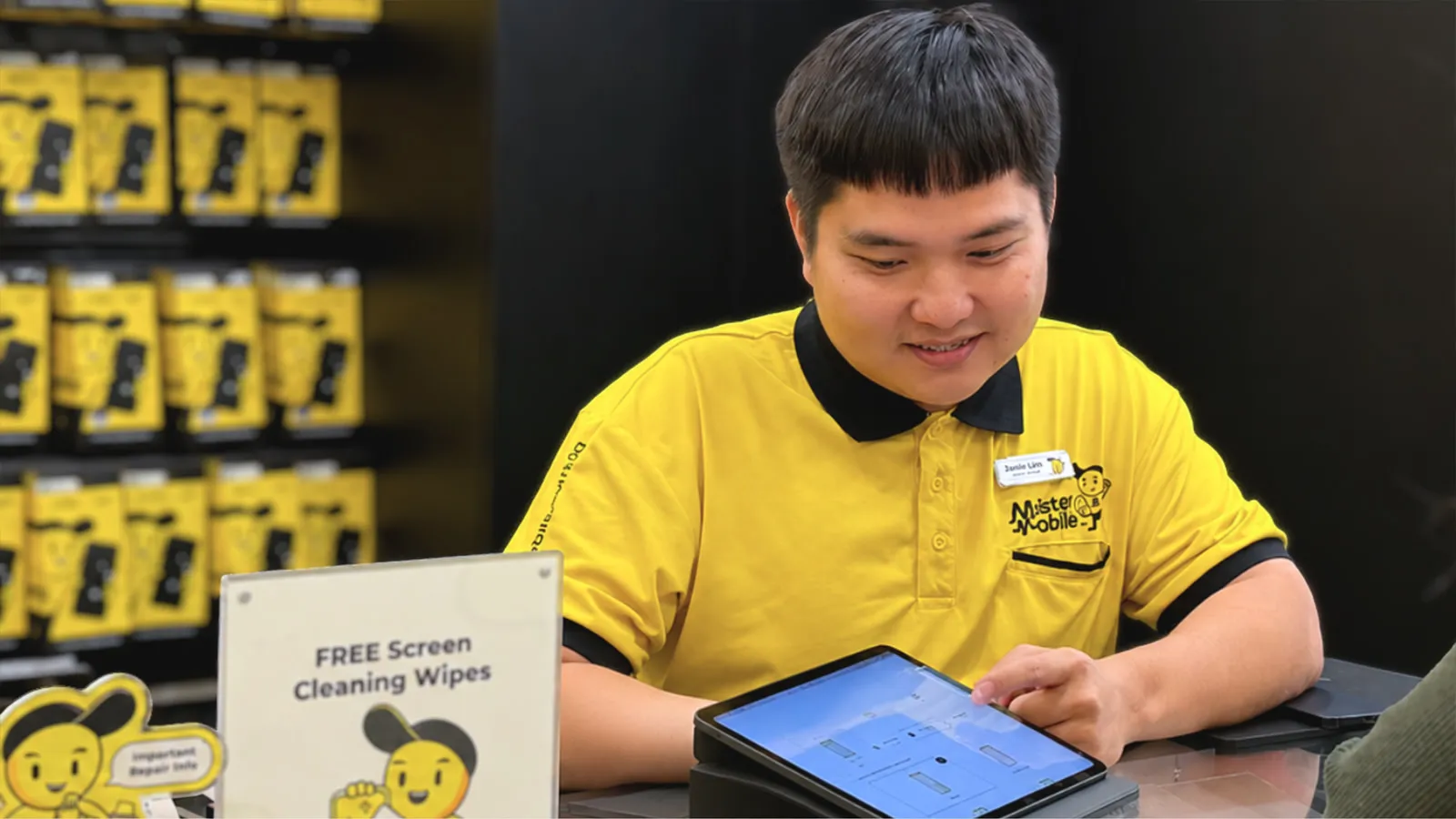
Mister Mobile, a smartphone retail and repair chain with 20 outlets, brought customers and orders from three systems into one CRM that runs its WhatsApp. More than 585,000 customer records and 1.05 million orders were consolidated, and automating data consolidation, customer replies and broadcasts saves about 120 man-hours of manual work a day, as reported by CNA.
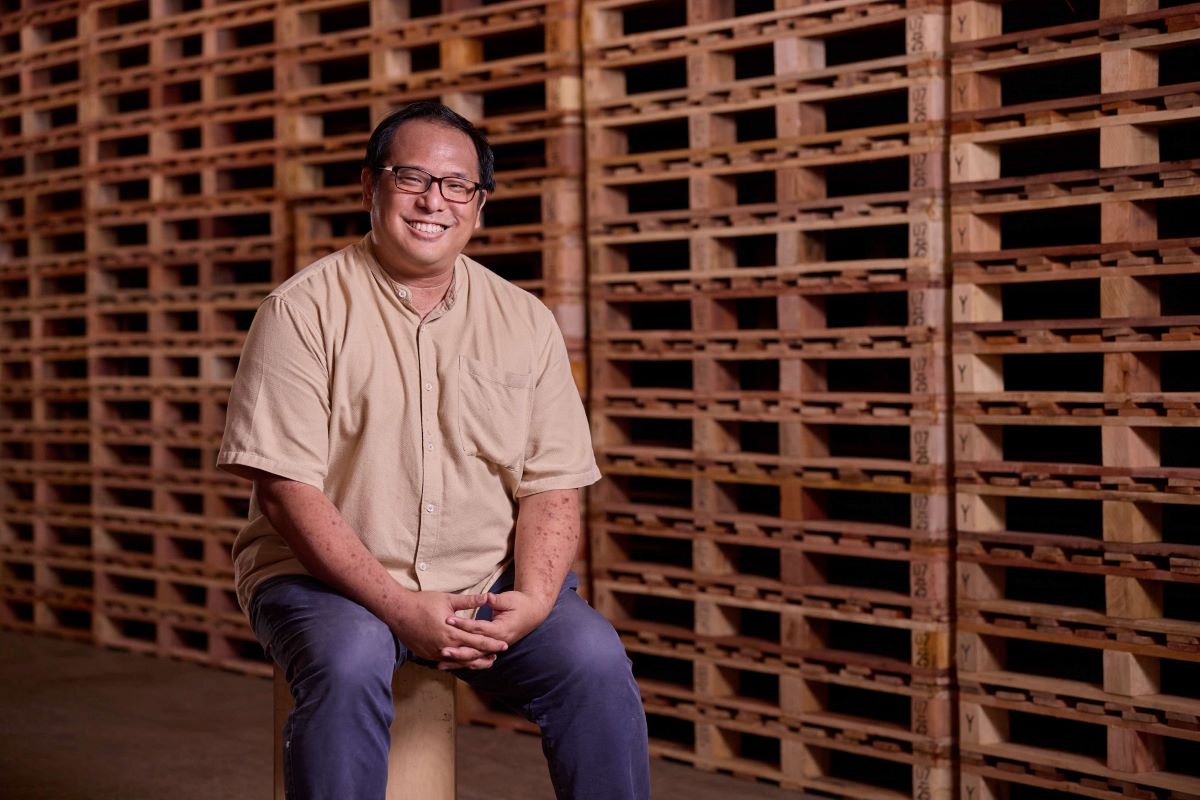
Yat Guan, a pallet and crate maker founded in 1931, uses Volty to take buyers through complex packaging specifications in English, Mandarin and Malay. Quote turnaround fell from 3 days to 1, with 95% spec accuracy. Its Managing Director, Ryan Lim, described the problem it solved: "Sometimes, even two to three days can be too slow because many jobs are time-sensitive."
A technology grant covers the system. If your project also redesigns jobs and trains staff, the NTUC Company Training Committee Grant may fund that part; see our NTUC CTC Grant guide. The same cost cannot be funded twice.
How to do this with Volty
Write down the outcome you want, such as faster quotes or fewer hours spent on data entry, and the systems the project must connect.
Check BizSG and Enterprise Singapore's EDGE pages, then decide between a pre-approved AI chatbot package and a larger project.
Get a quotation from Voltade for a listed package, or a proposal for the wider project, and apply on BGP before you pay anything.
If you would rather start without a grant, Volty's self-serve plans on the Singapore pricing page run from S$199 a month for Plus to S$2,000 a month for Ultra, billed monthly. Prices can change.
To see how Volty would handle your own enquiries before you scope a project, start a 7-day free trial from the Singapore pricing page.
Frequently asked questions
Is the Enterprise Development Grant (EDG) still open?
No. Enterprise Singapore's EDG ceased on 29 September 2026, together with PSG and MRA, and from 30 September 2026 businesses apply under the EDGE Grant. EDG applications submitted before 30 September are still assessed on EDG's rules, and ongoing EDG projects are supported through to claims.
What were the three pillars of EDG?
EDG funded projects under three categories: Core Capabilities, such as business strategy, financial management and human capital; Innovation and Productivity, such as automation, process redesign and product development; and Market Access, such as overseas pilots and standards adoption.
How much does the EDGE Grant fund?
As of 17 November 2026, Enterprise Singapore lists support of up to 70% for SMEs and up to 50% for non-SMEs, with support levels differing by activity. Companies can receive up to S$100,000 in total grant support per year across all activities, and the cap refreshes on 1 April.
Which EDGE activity covers a custom AI or digital transformation project?
Enterprise Singapore's Large-scale Digital Transformation activity covers projects that strengthen core operations with technologies such as AI or workflow automation and integrate systems such as sales and procurement. It lists up to 50% support for SMEs and up to 30% for non-SMEs.
Do I need a pre-approved vendor for EDGE?
Only for some activities. Single-function digital solutions, such as a GenAI customer engagement chatbot, are bought from pre-approved vendors listed on IMDA's SMEs Go Digital. Custom activities such as Large-scale Digital Transformation ask you to select suitable vendors yourself and submit their proposals and quotations.