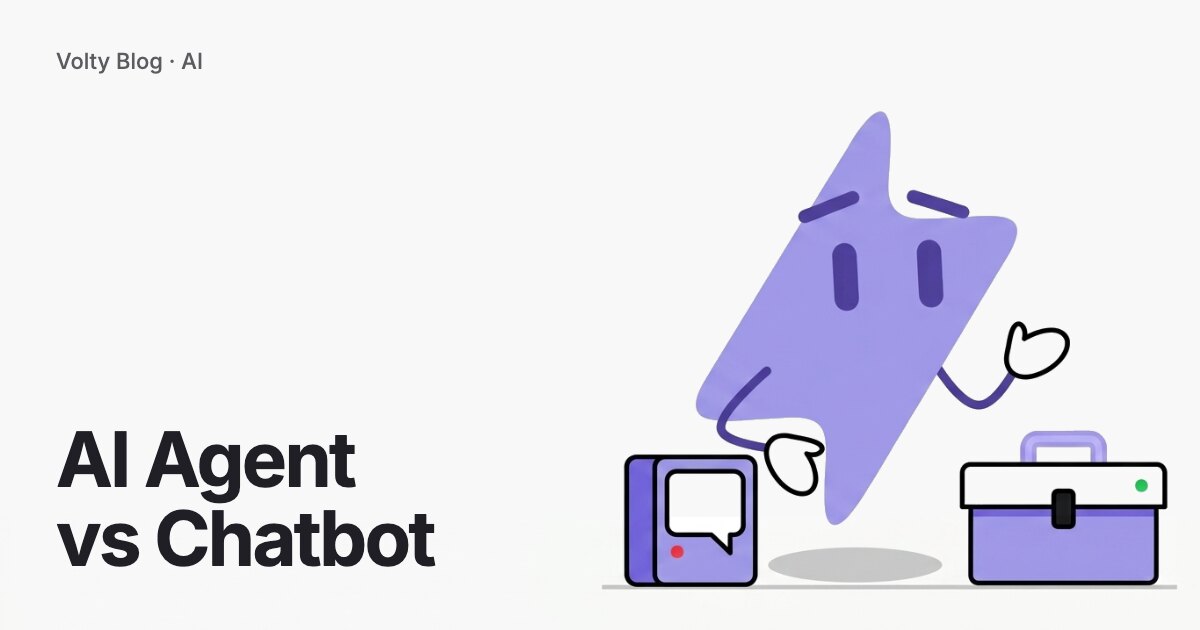


A chatbot answers within a path someone drew in advance. An AI agent is given a goal and decides for itself which steps and tools it needs to reach it. The difference shows up the moment a customer asks for something that was not on the menu: the chatbot apologizes or hands over, and the agent tries to do it.
The two words get used loosely, and vendors have blurred them on purpose, so this article separates three things that are all sold as "AI chat": the flow bot, the AI chatbot and the AI agent. Once you see where each one stops, choosing is mostly a matter of looking at your own inbox.
The three levels in one table
| Level | What it does | What it cannot do | Typical example |
|---|---|---|---|
| Flow bot | Walks the customer through buttons and fixed questions you drew in a builder | Understand a message that is off the path, or change anything outside the chat | "Press 1 for opening hours, 2 for delivery" |
| AI chatbot | Reads a free-text question and answers in natural language from your documents or website | Book, change, order or look up a live record | A web widget that answers policy questions |
| AI agent | Understands the request, answers from your knowledge, and takes actions in connected systems, with approvals where you want them | Anything you have not connected or permitted | Moves a booking to Saturday, updates the CRM, tells the customer |
Most disappointment with "AI chatbots" comes from buying the middle row and expecting the bottom one. A model that can discuss your refund policy fluently has not been given the ability to issue a refund.
What a flow bot is good for
A flow bot is deterministic. Given the same tap, it says the same thing every time, which is exactly what you want for a short list of regulated or fixed answers: opening hours, a legal notice, a menu that routes to the right department. It cannot misinterpret a free-text question because it does not accept one.
The cost is maintenance and coverage. Every path has to be drawn, and every customer who types a sentence the builder did not anticipate falls off the path. The usual result is a growing pile of "other" conversations that nobody designed for. If you are curious how this plays out on WhatsApp specifically, the WhatsApp chatbot guide covers the build options in more detail.
What makes an AI chatbot different
An AI chatbot replaces the menu with a language model that reads the customer's own words. You give it your documents, your website or your help center, and it composes an answer from them. It handles rephrasings, typos and several languages without anyone drawing a branch for them.
Its limit is that its world is text. It can tell a customer what your cancellation policy says. It cannot cancel anything. When the question turns into a request, it falls back to "please contact our team," and the work lands on a human anyway. The accuracy of this level depends almost entirely on the quality and freshness of the knowledge it reads, which is the subject of the AI knowledge base guide.
What makes an AI agent different
An AI agent adds three things to the chatbot: tools, state and judgment about when to use them.
Tools: it can read from and write to the systems you connect, such as a calendar, a CRM, an online store or a spreadsheet of orders.
State: it remembers what is already known about this customer and this conversation, so it does not ask for the phone number twice.
Judgment: it chooses between answering, asking a clarifying question, acting, and handing the conversation to a person.
Because it acts, an agent needs controls a chatbot does not. Someone has to decide which actions it may take alone, which wait for a person's approval, and when it must step back. That governance is a larger part of running an agent than the model itself, and hiring your AI agents rather than installing them sets out a framework for it.
The same message, handled three ways
A customer of a small dental clinic writes on WhatsApp: "Can I move my Thursday cleaning to Saturday morning? Also is the deposit refundable?"
Flow bot: shows a menu with "Book", "Cancel", "Opening hours". The customer taps Book, picks a date from a list that does not know about the existing booking, and ends up with two appointments.
AI chatbot: answers the deposit question correctly from the clinic's policy page, then says a team member will confirm the Saturday change. The customer waits until the front desk is open.
AI agent: finds the Thursday booking, checks Saturday morning slots in the calendar, offers two, books the one the customer picks, answers the deposit question from the policy, and updates the record. If the deposit has to be refunded, it asks the front desk for approval in one tap and tells the customer what happens next.
Only the third version closes the conversation. The first two create work for staff, and the work arrives at the time the customer wanted it done.
Where each one fails
Flow bots fail quietly by dead-ending the customer. Look for conversations that end after the menu and then restart with a person.
AI chatbots fail by sounding confident about something your documents do not say. The fix is better knowledge and an instruction to say when it does not know.
AI agents fail by acting on a wrong assumption: booking the wrong slot, quoting the wrong price, or answering a sensitive complaint without a human. The fix is permissions, approvals, a draft period and a record of every action.
Failure modes matter more than features when you choose, because they decide how much supervision you will need to budget for.
How to choose for your business
Export or skim the last 100 conversations in your inbox and sort them into four piles.
One-line questions with a stable answer, such as hours, address and delivery times.
Questions that need your knowledge in several sentences, such as how a service works or which product suits a need.
Requests that need a system, such as booking, rescheduling, an order status or a quote.
Conversations that need a person: complaints, negotiations, anything involving judgment about a relationship.
If nearly everything is in the first pile, a flow bot or a basic AI chatbot is enough and cheaper to run. If the second pile is large, you want an AI chatbot with good knowledge. If the third pile is where the volume sits, only an agent removes the work, because the answers are in your systems rather than in your documents. The fourth pile stays with people in every case, and a good agent hands those over early rather than trying to handle them.
A fair check on cost is the cost per resolved conversation. An agent costs more per message, since each reply involves a model and often several lookups, and it also resolves conversations a script would pass to a person. On Volty an AI agent reply or action uses 2 to 5 AI credits, and the Plus plan in the US market, US$159 a month as listed on the pricing page (prices can change), includes 15,000 credits, so you can estimate your own volume against that allowance before you commit.
What changes when you move to an agent
Expect these adjustments when you move to an agent:
The work shifts from drawing flows to writing down rules and reviewing replies.
Corrections become the main input. When a person fixes an answer, that correction has to reach the agent, so the same mistake does not come back.
Connections matter. An agent is only as useful as the systems you give it, so the list of integrations you need is part of the buying decision.
The inbox does not disappear. Humans still answer the fourth pile, and they need the full history when the agent hands over.
A customer that made the move
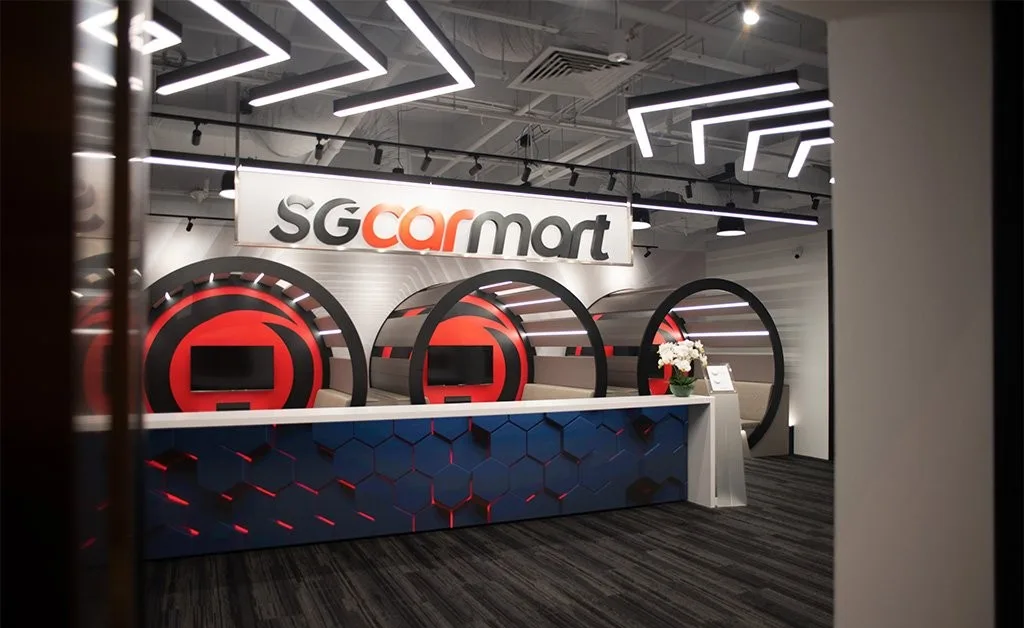
Sgcarmart, Singapore's No. 1 car platform, spent almost two years on a platform with limited automations before it switched. Its team now uses an agent and automations in place of trigger-based chat flows, to handle more complex situations, and built 16 or more apps and automations in days with five people who have no technical background. Man Hong of Sgcarmart Connect said in Sgcarmart's film: "We can have much more precise automation, and at the same time, we can also have an overview of all the dashboards, specifically for my team, when we have no engineering or coding background." Read the full story at Sgcarmart's case study.
Doing this in Volty
Volty is an AI helpdesk for builders, and the AI inside is an agent: it answers from your website and documents, takes actions in the systems you connect, labels and routes conversations, and hands over to your team with the history attached. Each inbox decides whether the agent replies on its own, writes drafts for your team to send or reject, or stays out, and your staff choose which actions come to them for approval first. At setup, Volty interviews your team, drafts its own instructions and tests itself before it talks to a customer. To see the agent on WhatsApp, start at Volty's WhatsApp AI page; every plan begins with a 7-day free trial.
Frequently asked questions
What is the main difference between an AI agent and a chatbot?
A chatbot replies inside a fixed path, either menu buttons or a knowledge base it reads from. An AI agent is given a goal, such as moving a booking, and works out which steps and which systems it needs to reach it. The agent can act, the chatbot mostly talks.
Is ChatGPT a chatbot or an AI agent?
A plain ChatGPT conversation is a chatbot, because it produces text and takes no action in your business. The same model becomes an agent when it is connected to your calendar, store or CRM and allowed to use them.
Are AI agents more expensive than chatbots?
Yes, per message an AI agent usually costs more, because each reply runs a model and often looks up several systems. An agent also finishes conversations a scripted bot would pass to staff, so the fair comparison is the cost of each conversation that ends resolved. On Volty, an AI agent reply or action uses 2 to 5 AI credits.
Can an AI agent be wrong or act without permission?
It can be wrong, which is why the controls matter. Run it in draft mode first, require approval for actions such as refunds, and read a sample of what it sends. Volty lets each inbox choose between replying, drafting and staying out, and staff choose which actions need approval.
Should a small business start with a chatbot or an AI agent?
Start with whichever matches your most common conversation. If most questions are one-line answers, an AI chatbot on your knowledge base is enough. If customers ask to book, change, order or check something, you need an agent that can reach those systems.